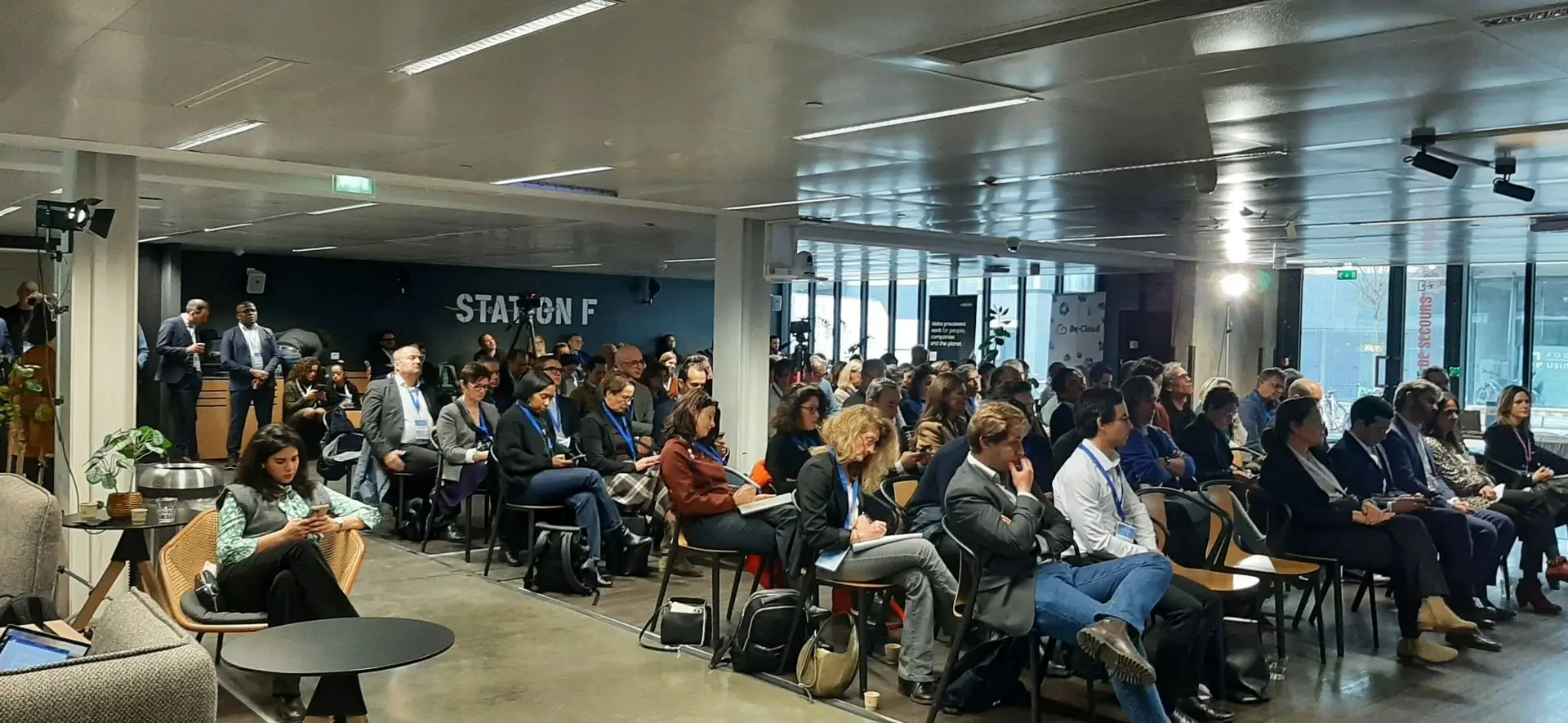
A morning devoted to a question that has become central to organizations. How to deploy AI capable of taking action, integrating with processes and creating measurable impact.
For three and a half hours, the morning alternated between feedback, discussion and clear statements of position. The objective. To highlight the concrete conditions for moving from conversational AI to agentic AI.
A common thread ran through all the discussions. AI is entering an execution phase.
From co-pilot to agent
Generative AI marked a turning point. Capable of dialoguing, translating and summarizing. But one thing quickly became clear. Assistance was no longer enough, and it was time to move from co-pilot to agent.
A co-pilot waits for an instruction. An agent reasons, plans, acts and links decisions within a business process.
This shift goes beyond technology. It is changing business models, role allocation and performance management.
Silamir's conviction is constant. Agentic AI creates value when framed by human intelligence and supported by solid foundations.
At Oddo BHF, the data trajectory doesn't begin with generative AI.
The family-owned banking group, founded 175 years ago, now has 3,200 employees and 160 billion euros in assets under management. At the end of 2021, it will launch the Data Now! program. The objective is clear. Make data and AI a lever for business differentiation.
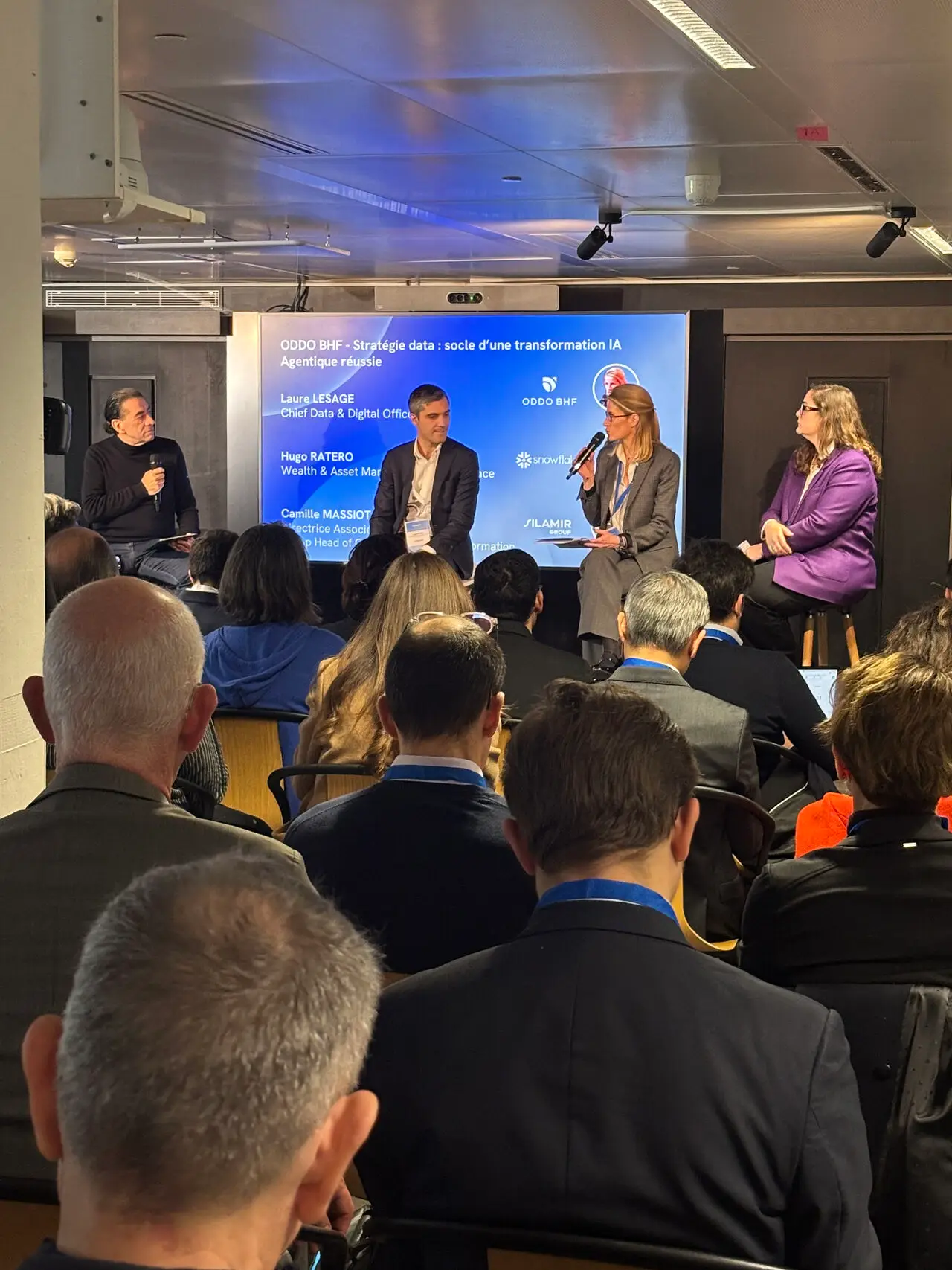
The approach is structured around four key areas:
- business-oriented data science projects,
- gradual modernization of the technological base,
- stronger data governance,
- developing a data culture at all levels.
Three lessons stand out after several years.
- Technological modernization is essential, but not enough.
- Hybrid skills and profiles make all the difference.
- Governance remains the most demanding and often underestimated area.
The message is clear. Without governance, data quality and a modern foundation, agentic AI won't scale. One point was agreed upon throughout the morning. Adoption is not a peripheral issue
At Oddo BHF, this is achieved through very concrete actions:
- top management involvement, with dedicated dialogue forums,
- extensive team training, notably through a partnership with Le Wagon for Business,
- graduate programs for the sustainable dissemination of data skills in the business.
When businesses take ownership of the tools, usage takes off. Without this ownership, promises remain theoretical.
At Bouygues Telecom, AI and agentique are never treated as an end in themselves.
The objective remains constant: Improve the customer and employee experience, while controlling costs.
The approach is pragmatic:
- target areas where AI is rapidly creating value,
- accept that not everything is agentic,
- intelligently orchestrate automation, agents and humans.
The key message is: real change comes not from tools, but from the hybridization of skills.
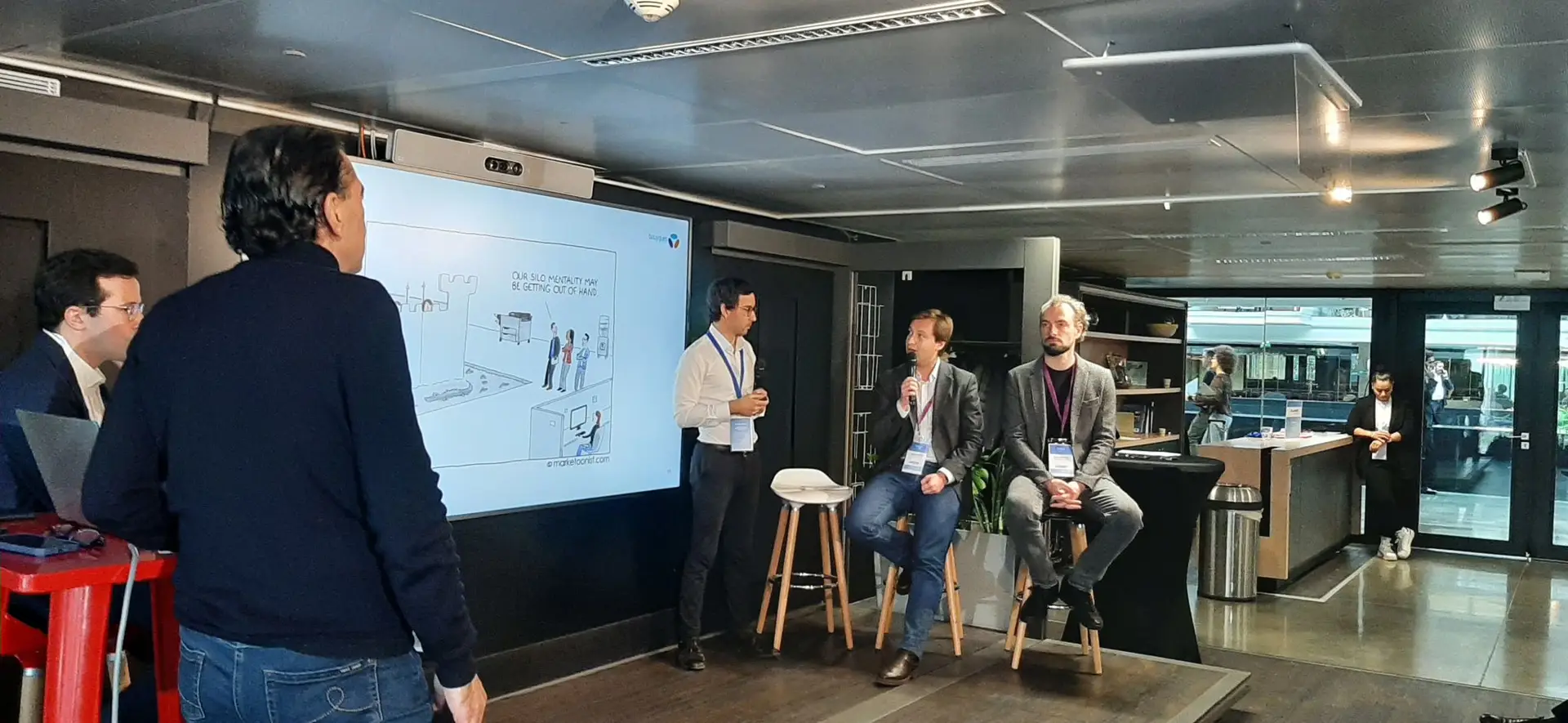
Round table: Arbitrations that count
Where to start? The answer is unanimous. Process, not technology.
A process is ready for agentique when :
- the decision is critical to the business,
- the human time required is high,
- the data exists and can be used.
Otherwise, the agent is simply automating chaos.
Automation or agentic?
- Automation. Known path, rules, volume.
- Agentique. Target, variability, exceptions.
In most cases, the best ROI is hybrid.
- The switchboard is automated.
- The complex is entrusted to the agents.
- Human intervention at critical points
Make or Buy: This is not a technical debate. It's a strategic choice.
Buying allows you to move fast and secure. Building allows you to stand out from the crowd, by assuming the full cost.
In reality, the two coexist. Provided you have an orchestration layer to prevent stacking.
ROI and management: the most tangible ROI is often decision-making, rather than financial.
Concrete examples were shared:
- analyses reduced from several hours to a few tens of minutes,
- increased ability to explore scenarios,
- time freed up for decision-making.
Trust is based on explicability. An answer alone is not enough. Reasoning must be understandable and traceable.
Governance and control: Accelerating without a framework has a cost.
A poorly governed project can generate up to 35 % in additional costs and delays. AI governance must remain business-oriented.
Several levers were mentioned:
- train the risk, legal and safety functions,
- define a clear identity for each agent,
- ensure continuous traceability in production.
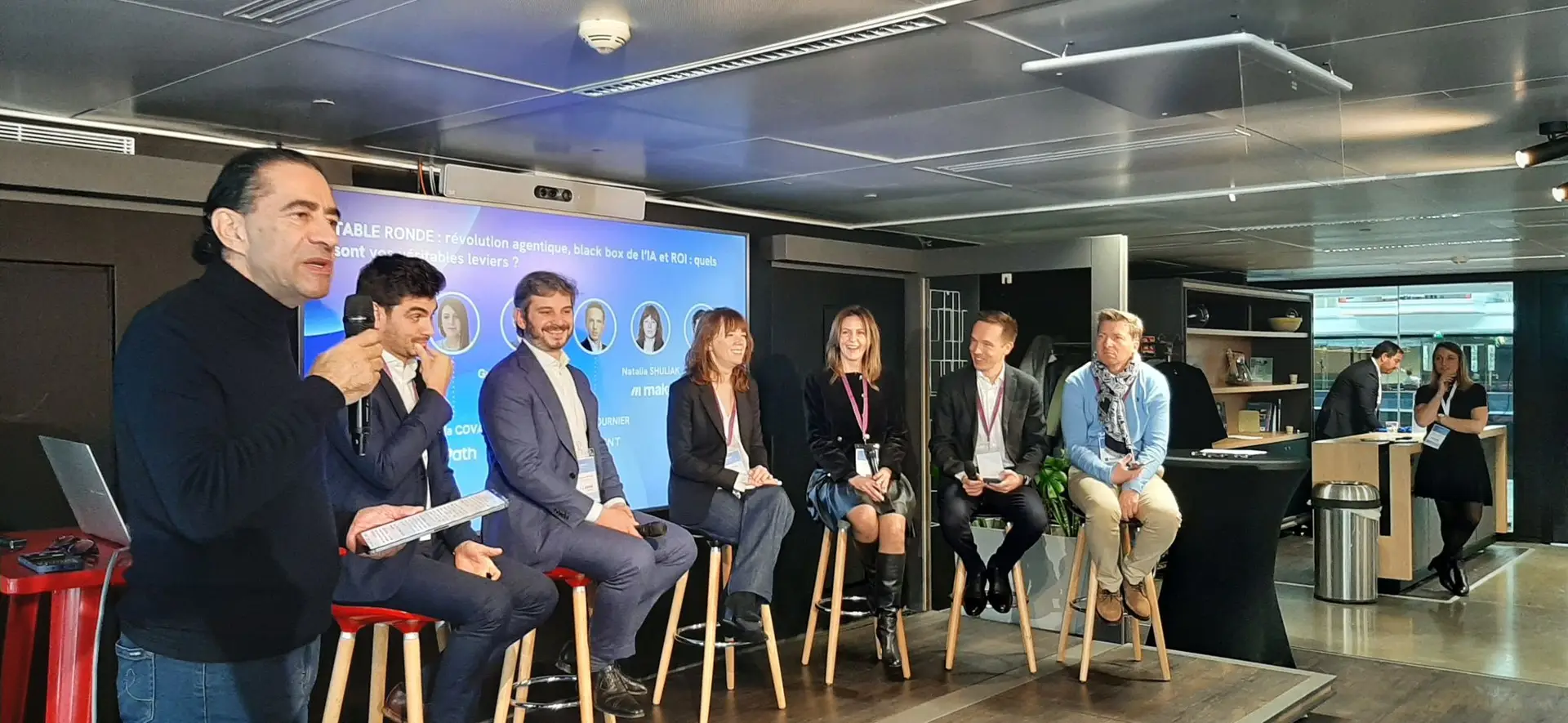
What's on the horizon
- Agentic AI is no longer a projection. It is already at work in organizations.
- It's no longer about experimentation. It's about industrialization.
- The role of managers is changing. Less task management. More decision orchestration.
- Value doesn't come from AI alone. It comes from the way humans and agents work together.
FORWARD by Silamir has set this framework: Concrete. Demanding. Execution-oriented.
Future editions will build on this momentum.